
Ok, let’s put the supporting research articles aside for a moment. We know why explicit and compassionate social-emotional instruction is essential for students, don’t we? Think back….what motivated you to get to school? …….FRIENDS!
- playing with friends
- talking with friends
- sharing secrets with friends
- laughing with friends
- In other words, developing relationships through social interaction skills!
Additionally, Weissberg (2016) notes that with increasingly diverse school populations, both culturally and linguistically, social and emotional learning activities can bridge gaps when forming relationships.
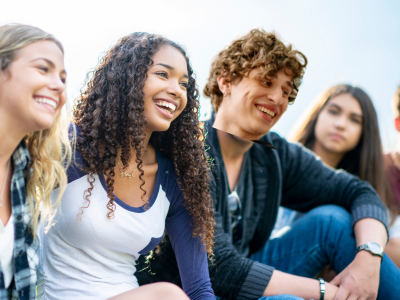
As an adult, parent, or teacher, you know the importance of social skills. Observing a child having difficulty understanding an interaction and subsequently demonstrating frustration, anger, or withdrawal is heartbreaking. We, as speech-language pathologists, teachers, parents, and educational specialists, have an obligation to explicitly teach social interaction skills to children who have difficulty in this area.
Social-Emotional Research
Research shows that social skills instruction impacts interpersonal development as well as students’ emotional intelligence. Students who interpret social cues successfully are more competent at navigating novel social experiences, resolving conflicts, and engaging in group interactions. This leads to students being “better equipped for future opportunities in the workforce” and in their personal lives (Advanced Autism Services, 2025). Strong social skills are associated with better mental health, enabling students to adapt to the challenges life brings. Children “equipped with these skills tend to experience lower levels of anxiety and depression” (Advanced Autism Services, 2025). As students engage effectively in social experiences, they gain positive self-esteem and are more likely to interact socially with peers.
Emotional intelligence often correlates with higher academic performance. Research actually “shows that social-emotional learning not only improves achievement by an average of 11 percentile points, but it also increases prosocial behaviors such as kindness, sharing, and empathy” (Durlak et al., 2011).
Social-Emotional Instruction
Needless to say, explicit and compassionate social-emotional learning activities and instruction are essential for students. Meyers et al., (2015) go further, indicating which areas to focus on during instruction. Those are:
- Self-awareness
- Self-management
- Social awareness
- Relationship skills
- Responsible decision-making
Social-Emotional Resources
Being a speech-language pathologist, developing social-emotional learning activities with an expressive language component, is a priority. Additionally, I use real-life pictures in my resources. This can be very important for students to transfer and generalize skills into daily life. My resources address each of the five areas listed that are important to this type of instruction. In the Boom™ Learning platform, I have the following digital social-emotional and interactive activities:
- Social Awareness- Encouraging vs Discouraging
- Social Awareness- Expected vs Unexpected for Middle/High School Students
- Social Awareness- Expected vs Unexpected for Elementary Students
- Understanding Mixed Messages in Social Communication
- Problem Solving with Conditional If/Then Statements- Adolescents & Teens
- The Impact of Words & Actions
- Is My Plan Okay?
- Solving My Own Problems!
I also have printable activities in my Teachers Pay Teachers Store.
Of course, I love my resources, but other resources (I receive no benefit for recommending) that I have found highly valuable are:
Everyday Speech (digital app)- PreK-high school
We Thinkers – (printed materials) for children ages 4-7 years
Student Treasures– great ideas for lessons for K-5th grade